History and evolution
1725 - 2025

When quality is tradition
Casa Botín, founded in 1725, is the oldest restaurant in the world according to the Guinness Book of Records and one of the references of the best traditional cuisine in Madrid.
Forbes magazine ranked it third among the 10 best classic restaurants in the world for Casa Botín and its two specialties, the delicious suckling pig and lamb roasted in the Castilian style.
1561

The Court arrives in Madrid
Back in 1561, King Philip II ordered the transfer of the Court to the city of Madrid. The young king and his wife, Isabella of Valois, liked our city better than Toledo or Valladolid. The reasons for this preference were, above all, of a practical nature: Madrid was in the center, equidistant from the peninsular extremes; its water was good and its climate pleasant and healthy.
1618

Controlling urban chaos
The arrival of the Court meant a spectacular and somewhat chaotic urban growth for our city. Precisely to control this chaos, the so-called Junta de Policía y Ornato was created, chaired by the architect Francisco de Mora, Juan de Herrera's quantity surveyor during the construction of the Monastery of El Escorial. This Board was in charge of aligning facades, eliminating abrupt unevenness and eliminating overhangs.
1590

The foundations of this mythical building
Madrid continued to grow, despite the fact that upon the death of Philip II, his successor, Philip III, moved the Court to Valladolid, only temporarily. And it is precisely at this time (specifically in 1590) when we have evidence of the existence of the building that today houses Botín.
1606
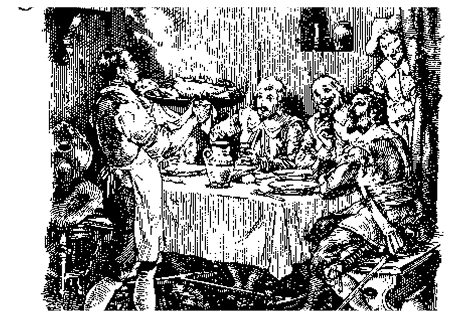
A cook named Botín
In 1606, the Court returned to Madrid and in 1620, with the reform carried out in the Plaza Mayor (formerly Plaza del Arrabal), the area became the main commercial enclave of the city: shoemakers, tanners, cutlers, brass workers, blacksmiths, the streets of the area adopted the name of the trades that were exercised in them: Ribera de Curtidores, Plaza de Herradores and, of course, Calle Cuchilleros.
It is in one of these streets where a French cook named Jean Botín established his business, who arrived in Madrid with his wife of Asturian origin, with the intention of working for a nobleman of the Court of the Habsburgs. In 1725, a nephew of Botín's wife, Cándido Remis, opened a small inn on Cuchilleros Street and renovated the first floor of the building, closing the existing arcades.
S. XVIII

Between history and legend
It is curious that, until well into the 18th century, it was not allowed to sell meat, wine or other food in the inns, since it was considered an intrusion that was detrimental to other guilds. Thus, only what the guest brought to be cooked could be served.
This is the origin of the legend that "in Spanish inns you could only find what the traveler brought".
S. XIX

Why "casa" Botín
The ground floor was renovated again in the 19th century: the polychrome wood frieze with gold leaf at the entrance was built, as well as the shop windows and the pastry counter where pestiños, bartolillos, suizos and glorias de crema were sold.
At that time Botín was considered a "house of meals" because the term "restaurant" was only used by some establishments, very few and exclusive, that wished to emulate the Parisian establishments.
S. XX

The González family and the spirit of Botín
With the arrival of the 20th century, Botín came into the hands of its current owners: the González family. At that time, only the entrance and the second floor were dedicated to the restaurant, the cellar was used as a warehouse and the second and third floors were used as a family home.
When Amparo Martín and her husband, Emilio González, took over the business, Botín was only a small family business with only seven employees, including the couple and their three children.
1936 - 1939

In times of war
The beginning of the Civil War put an end to the family's hopes of making their small business prosper. Amparo and her children went to a town in Castellón, Segorbe, and Emilio stayed behind to continue running the house, which was converted into a dining room for the militiamen.
After the war and the terrible post-war period, the couple's sons, Antonio and José, took over the business and little by little turned it into what it is today.
1987

Record haul
As an anecdotal fact referring to this period, the Guinness Book of Records, in its 1987 edition, states that a teenage Goya, back in 1765, worked as a dishwasher at Botín. In the same edition, Botín is designated as the oldest restaurant in the world.
2025

300th Anniversary
The 300th anniversary of Botín will be celebrated in 2025. A new restaurant logo, a new website and numerous events will be held to celebrate the 300th anniversary.
History and evolution
1725 - 2025
When quality is tradition
Casa Botín, founded in 1725, is the oldest restaurant in the world according to the Guinness Book of Records and one of the references of the best traditional cuisine in Madrid.
Forbes magazine ranked it third among the 10 best classic restaurants in the world for Casa Botín and its two specialties, the delicious suckling pig and lamb roasted in the Castilian style.
1561
The Court arrives in Madrid
Back in 1561, King Philip II ordered the transfer of the Court to the city of Madrid. The young king and his wife, Isabella of Valois, liked our city better than Toledo or Valladolid. The reasons for this preference were, above all, of a practical nature: Madrid was in the center, equidistant from the peninsular extremes; its water was good and its climate pleasant and healthy.
1618
Controlling urban chaos
The arrival of the Court meant a spectacular and somewhat chaotic urban growth for our city. Precisely to control this chaos, the so-called Junta de Policía y Ornato was created, chaired by the architect Francisco de Mora, Juan de Herrera's quantity surveyor during the construction of the Monastery of El Escorial. This Board was in charge of aligning facades, eliminating abrupt unevenness and eliminating overhangs.
1590
The foundations of this mythical building
Madrid continued to grow, despite the fact that upon the death of Philip II, his successor, Philip III, moved the Court to Valladolid, only temporarily. And it is precisely at this time (specifically in 1590) when we have evidence of the existence of the building that today houses Botín.
1606
A cook named Botín
In 1606, the Court returned to Madrid and in 1620, with the reform carried out in the Plaza Mayor (formerly Plaza del Arrabal), the area became the main commercial enclave of the city: shoemakers, tanners, cutlers, brass workers, blacksmiths, the streets of the area adopted the name of the trades that were exercised in them: Ribera de Curtidores, Plaza de Herradores and, of course, Calle Cuchilleros.
It is in one of these streets where a French cook named Jean Botín established his business, who arrived in Madrid with his wife of Asturian origin, with the intention of working for a nobleman of the Court of the Habsburgs. In 1725, a nephew of Botín's wife, Cándido Remis, opened a small inn on Cuchilleros Street and renovated the first floor of the building, closing the existing arcades.
S. XVIII
Between history and legend
It is curious that, until well into the 18th century, it was not allowed to sell meat, wine or other food in the inns, since it was considered an intrusion that was detrimental to other guilds. Thus, only what the guest brought to be cooked could be served.
This is the origin of the legend that "in Spanish inns you could only find what the traveler brought".
S. XIX
Why "casa" Botín
The ground floor was renovated again in the 19th century: the polychrome wood frieze with gold leaf at the entrance was built, as well as the shop windows and the pastry counter where pestiños, bartolillos, suizos and glorias de crema were sold.
At that time Botín was considered a "house of meals" because the term "restaurant" was only used by some establishments, very few and exclusive, that wished to emulate the Parisian establishments.
S. XX
The González family and the spirit of Botín
With the arrival of the 20th century, Botín came into the hands of its current owners: the González family. At that time, only the entrance and the second floor were dedicated to the restaurant, the cellar was used as a warehouse and the second and third floors were used as a family home.
When Amparo Martín and her husband, Emilio González, took over the business, Botín was only a small family business with only seven employees, including the couple and their three children.
1936 - 1939
In times of war
The beginning of the Civil War put an end to the family's hopes of making their small business prosper. Amparo and her children went to a town in Castellón, Segorbe, and Emilio stayed behind to continue running the house, which was converted into a dining room for the militiamen.
After the war and the terrible post-war period, the couple's sons, Antonio and José, took over the business and little by little turned it into what it is today.
1987
Record haul
As an anecdotal fact referring to this period, the Guinness Book of Records, in its 1987 edition, states that a teenage Goya, back in 1765, worked as a dishwasher at Botín. In the same edition, Botín is designated as the oldest restaurant in the world.
2025
300th Anniversary
The 300th anniversary of Botín will be celebrated in 2025. A new restaurant logo, a new website and numerous events will be held to celebrate the 300th anniversary.